Choosing La Prairie also means choosing a specific setting. The old town’s heritage, La Citière’s landscape, recreation landmarks and contemporary neighbourhoods call for different comparisons. I live a few minutes from the city and support your real estate plans here. This guide helps you explore its areas, prepare viewings and present a property for sale.
Key takeaways
- Locate each address and distinguish neighbourhoods from electoral districts.
- Compare uses, journeys and property-specific records.
- Separate existing amenities from planned improvements.
Getting oriented: neighbourhoods, districts and residential projects
La Prairie can be explored at several scales. Vieux-La Prairie refers to a historic setting, Symbiocité to a residential neighbourhood, and La Prairie-sur-le-Parc to a development project. The City also uses eight electoral district names: la Milice, Christ-Roi, Vieux La Prairie, La Citière, La Clairière, La Magdeleine, la Bataille and la Petite-Gare. These boundaries serve municipal representation; properties within one district do not necessarily share the same age, setting or value.
Use the reference points below to build a shortlist, then locate each address on the municipal map. This guide does not define cadastral boundaries. For a real estate decision, the street, building orientation, maintenance and actual access often matter more than a neighbourhood label.
Vieux-La Prairie: heritage and street-level living
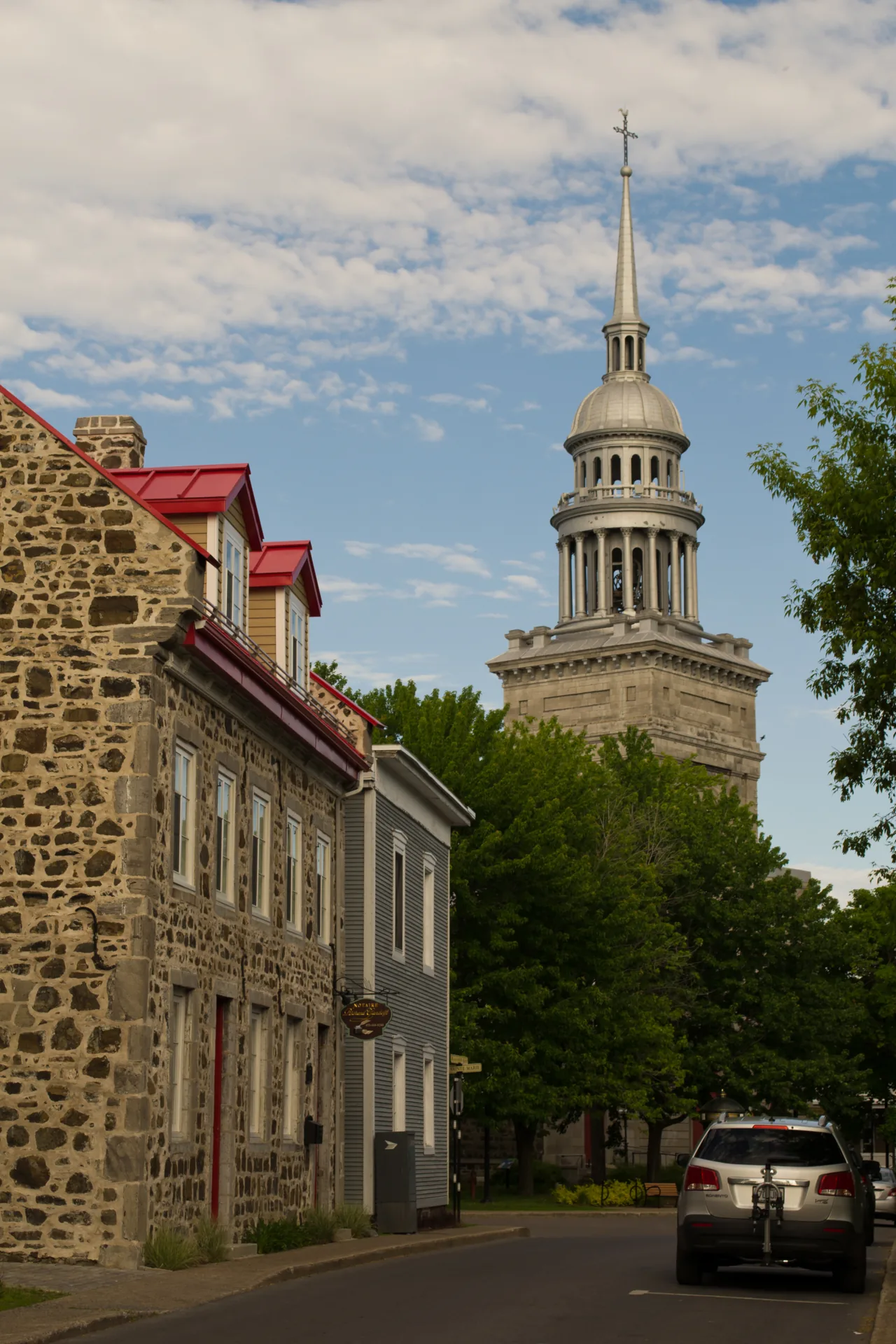
The historic core stands out for its buildings, streets and history. The City notes that the heritage site was declared in 1975. Check whether the property you are considering actually falls within its boundary. A walk around Chemin de Saint-Jean offers a feel for the old town, but does not establish the rules applying to a particular building.
When buying, examine how spaces work today: storage, stairs, parking and yard access. If your plans depend on new windows, an addition or façade changes, clarify municipal and heritage procedures before relying on that scenario. Request maintenance records and past work authorizations. When selling, show the details that give the home character and explain documented improvements. A clear property file helps buyers understand what they are viewing.
La Citière: the lake, Balmoral and property-level comparisons
The conservation plan describes La Citière as a residential area arranged around an artificial lake, with detached, semi-detached and row houses. Avenue de Balmoral is an important reference point. The City lists a park with water play facilities on that avenue. These features provide a starting point for exploring, without implying that a property has private lake access.
A water view, a lot beside the lake and a right of access are different things. Clarify what belongs to the property and what is shared or public. Compare yard orientation, privacy, parking and interior spaces. Questions about shorelines or a dock should be checked with the City for the address concerned. Selling photos can show the landscape while accurately describing the property’s features and rights.
La Clairière: local recreation and everyday routes
According to its municipal listing, Parc de La Clairière on Avenue Ernest-Rochette includes a pump track, playground equipment, water play and basketball facilities. It provides a concrete way to assess how recreation fits into your week. Try the route from the home you are considering using your actual mode of travel.
Being near a park does not create the same experience at every address. Observe crossings, yard views and activity around entrances. The City also places the La Prairie-sur-le-Parc project between La Clairière and the bus terminal: for nearby properties, review phase updates and construction notices. Sellers can show useful routes and room functions; buyers should distinguish existing surroundings from future plans.
La Magdeleine: start with the services you use
La Magdeleine is one of the municipal district names. Among local landmarks bearing that name, Boulevard de la Magdeleine has Parc Jacques-Laveault, where the City lists playground and basketball facilities. Such reference points help plan a visit; they do not establish identical benefits for every street.
List the destinations that matter: work, school, activities and shopping. Check access from each property. Families should confirm school assignment using the exact address rather than the neighbourhood name or nearest school. Inside, consider whether bedrooms, workspace, storage and the yard support that routine. When selling, describe verifiable uses and completed work instead of relying on a general phrase such as “close to everything.”
Christ-Roi: examine the setting and the building
The City’s historical overview links the opening of Christ-Roi parish to La Prairie’s growth after the Second World War. Today, Parc du Christ-Roi on Rue Rouillier provides a recreation landmark with water play and playground equipment. That history does not establish the construction year or condition of an individual property.
For a purchase, gather major renovation dates and examine how the home has changed. A finished basement, renovated kitchen and replaced roof answer different questions. Prepare for inspection using available records and unresolved points. On your walk, observe traffic, sidewalks and parking at relevant times. When selling, clear maintenance records and an accurate presentation of rooms help communicate the property’s value beyond location alone.
Symbiocité: compare at building level
Symbiocité already has a dedicated guide on this site. Its contemporary setting, paths and outdoor spaces invite exploration on foot. I have completed transactions in this neighbourhood and can help organize the questions relevant to your property or search. That experience does not replace checking each address’s records and current circumstances.
When comparing condos, consider floor, orientation, views, storage, parking and condominium operations. Check expenses against current documents, including address-specific taxes. When selling, distinguish building amenities from public neighbourhood facilities. The Symbiocité guide expands on these points and outlines how to prepare your plans.
La Prairie-sur-le-Parc: understanding a developing neighbourhood
The City presents La Prairie-sur-le-Parc as a transit-oriented neighbourhood between La Clairière and the bus terminal. It is distinct from Symbiocité. Municipal documentation describes phased development and planned public spaces. Timelines evolve, so consult the project page for the work and amenities announced when you begin your search.
Before choosing a property within or near a developing area, separate what exists today from what appears in plans. Which entrances are usable? What could be built in front of your view? Which parts of your route pass a construction site? Ask about the relevant phase and retain supporting documents. A nearby resale listing should clearly distinguish existing amenities from future projects.
Choose your area: a practical viewing method
Start with three essential needs and three preferences. A closed office, parking and a commute that fits your schedule may be essential; an open view or nearby park may be preferences. Visit two or three areas with the same checklist. Record tested journeys, usable spaces, documents received and unresolved questions for each address.
Return at a different time if light, noise or street activity matters to your decision. Compare known expenses using supporting records. Asking prices and city averages alone do not explain a property’s maintenance or adaptation needs. We can organize that comparison together to identify the trade-offs you are prepared to make.
Selling in La Prairie: connect location with your property’s strengths
The neighbourhood provides context; the property must demonstrate what it offers. Useful marketing combines accurate photos, room descriptions, documented improvements and relevant local reference points. In the old town that might include architectural details; in La Citière, the lot setting; in Symbiocité, the home’s features and operations. Adapt these ideas to the actual property rather than applying them automatically.
I live a few minutes from La Prairie and have already completed transactions in Symbiocité. For your sale or purchase, I start with your timeline, needs and address-specific facts. We then identify the documents, visits and strategy required. Do you have an area in mind, or are you comparing several neighbourhoods? Let’s discuss your La Prairie plans.
Sources and useful links
- City of La Prairie — Electoral district map
- City of La Prairie — La Prairie overview and heritage site
- City of La Prairie — Conservation plan — La Citière
- City of La Prairie — Parc de La Clairière
- City of La Prairie — Parc Jacques-Laveault
- City of La Prairie — Parc du Christ-Roi
- City of La Prairie — Parks and water play
- City of La Prairie — La Prairie-sur-le-Parc project
- City of La Prairie — Permit applications
- City of La Prairie — Municipal bylaws