The certificate of location is one of the documents most likely to cause avoidable delays in a sale. Reviewing it early helps determine whether it still reflects the property’s current condition and can satisfy the notary’s requirements.
Updated:
Key takeaways
- Prepared by a land surveyor, a certificate of location presents a property’s current situation and condition in relation to title, the cadastre and applicable laws and regulations.
- A certificate may become inadequate when it no longer reflects the property’s current condition.
- Producing a new certificate takes time.
What does a certificate of location describe?
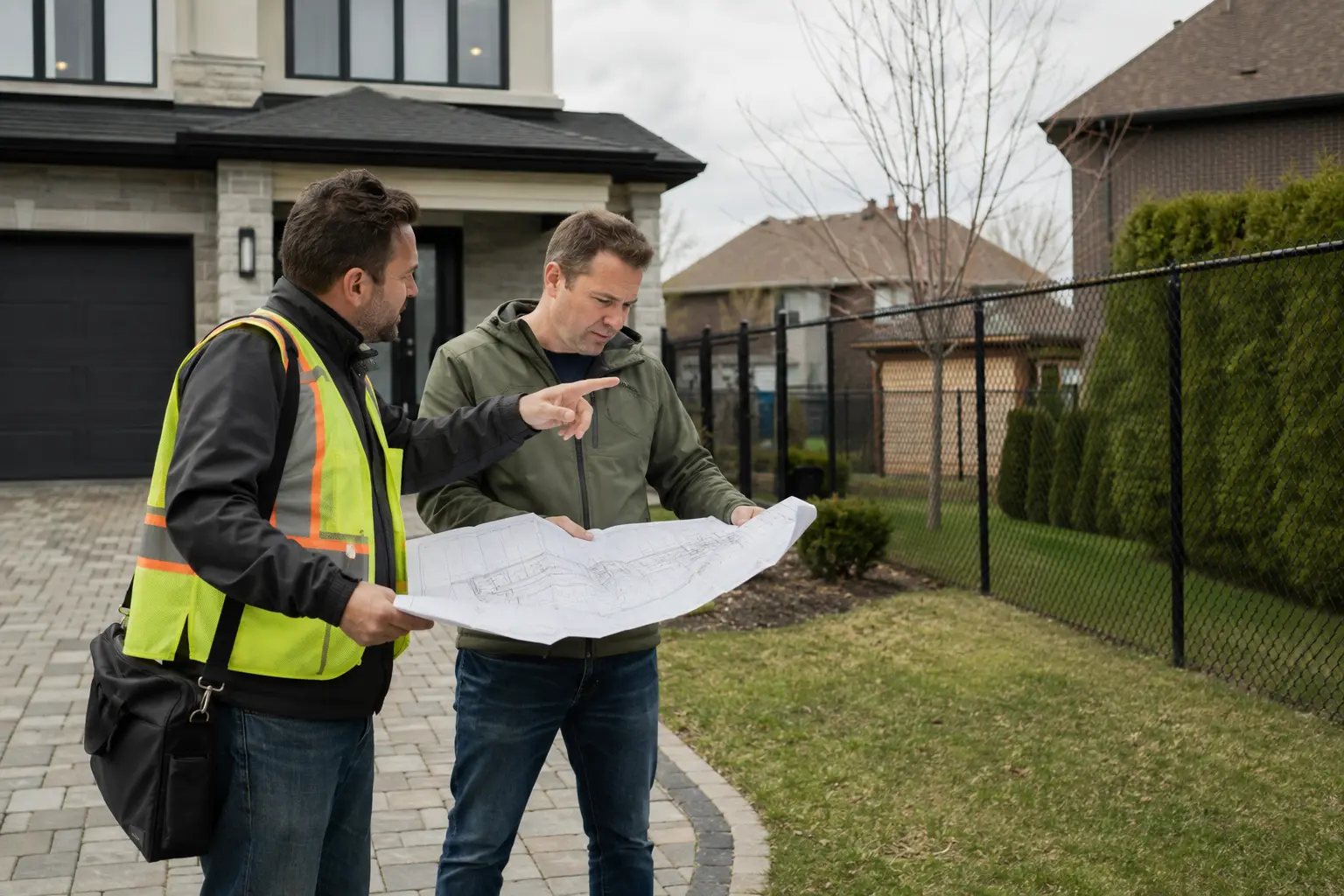
Prepared by a land surveyor, a certificate of location presents a property’s current situation and condition in relation to title, the cadastre and applicable laws and regulations. It normally includes both a report and a plan.
It may show buildings, lot boundaries, certain servitudes, encroachments and visible elements such as a pool, shed or fence. Its role is not to confirm construction quality, but to document the property’s legal and physical situation.
When may a new certificate be necessary?
A certificate may become inadequate when it no longer reflects the property’s current condition. Adding a pool, shed, garage, fence or extension, as well as changes to boundaries or a cadastral renovation, may justify a new review.
When the seller’s certificate of location is more than ten years old, the notary may require a new one even if the existing document still appears to reflect the property’s current condition. This practice notably accounts for Québec’s ten-year acquisitive-prescription period and the Supreme Court of Canada’s decision in Ostiguy v. Allie, 2017 SCC 22, which confirmed that a property right acquired by prescription could be asserted against the registered owners.
The decision does not, however, create an automatic expiry date for every certificate of location. The document’s age, changes to the property, cadastral information and the transaction’s specific requirements should be reviewed with the acting notary and, when needed, a land surveyor.
Why review it before listing?
Producing a new certificate takes time. Waiting until an offer has been accepted can create pressure around financing and closing deadlines. Reviewing it at the beginning of the listing process makes it possible to order a replacement earlier when needed.
The certificate may also reveal an issue that should be explained or documented before showings, such as an apparent encroachment, servitude, possible non-compliance or difference between the occupied lot and the plan. Finding it early provides more time to consult the appropriate professionals.
Who pays for a new certificate?
In a typical transaction, the seller generally provides a certificate that reflects the property’s current condition. If the existing certificate is outdated or insufficient, the seller should normally plan for the cost of a replacement, subject to the terms agreed upon in the promise to purchase.
If the buyer requests a new certificate while the seller’s document remains valid and no change has occurred, the allocation of costs may differ. The broker and notary can clarify how the clauses apply to the specific transaction.
What to verify now
Check the certificate date, compare its plan with the property’s current condition and list any work completed since it was prepared. Also verify whether there has been a cadastral renovation or a change involving a servitude, fence or accessory building.
This preparation does not replace advice from a land surveyor or notary. It does, however, help provide the right documents quickly and reduce the risk that a late discovery delays the sale.